



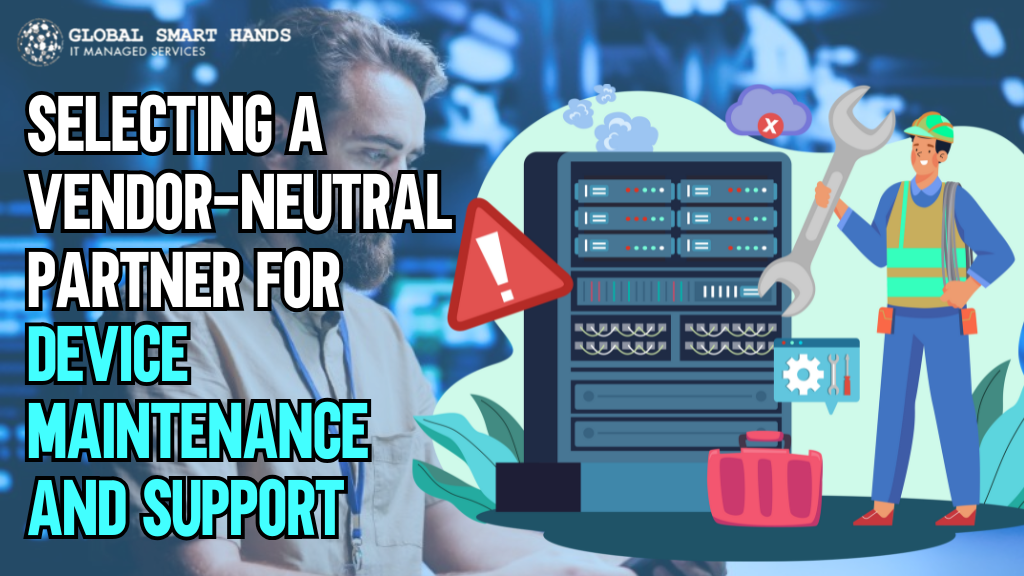
In today’s rapidly evolving technology landscape, businesses face constant pressure to maintain peak performance across their IT infrastructure while keeping costs under control. Choosing the right partner for this task can significantly impact efficiency, uptime, and long-term cost savings. Among the various options available, vendor-neutral partners stand out as a smart, future-focused choice.
Unlike vendor-specific service providers who are tied to a particular brand or ecosystem, vendor-neutral partners offer flexibility, cost efficiency, and unbiased advice. This independence allows them to recommend solutions solely based on a client’s needs rather than brand loyalty, which is vital in a multi-vendor IT environment.
Why Vendor-Neutral Maintenance Matters?
According to a 2024 Gartner report, over 60% of organizations now operate in hybrid IT environments combining products from multiple vendors. As technology stacks grow more diverse, relying solely on an Original Equipment Manufacturer (OEM) for maintenance can lead to inflated costs, inflexible contracts, and limited-service scope.
OEMs typically prioritize their own products, creating challenges when businesses use devices from several brands. Vendor-neutral providers, on the other hand, can support equipment from multiple manufacturers, consolidating maintenance under a single service agreement. This reduces administrative overhead and often leads to cost savings of 30–50% compared to OEM contracts, as reported by a recent IDC analysis.
What are the Benefits of a Vendor-Neutral IT Support Partner?
1. Cost Efficiency
Third-party, vendor-neutral partners can often extend the life of existing equipment, avoiding the premature upgrades that OEMs may encourage. By sourcing parts from multiple suppliers and maintaining expertise across brands, they help maximize return on investment.
2. Flexibility and Customization
Vendor-neutral contracts are more adaptable. Organizations can tailor service levels to match business priorities, whether that means 24×7 global support or targeted assistance in specific locations.
3. Reduced Downtime
Because these providers are not tied to rigid OEM procedures, they can act quickly. Many offer rapid response times as short as four hours, ensuring that business continuity is maintained even in critical situations.
4. Expertise Across Multiple Technologies
Vendor-neutral teams are trained across different manufacturers’ devices, giving them a broad skill set for troubleshooting complex issues in mixed environments.
What are the Risks of Staying Vendor-Locked?
While OEM support has its place it comes with limitations, particularly for highly specialized equipment. Vendor lock-in can inflate long-term costs, especially when older equipment is involved. OEMs may stop supporting legacy devices to encourage upgrades, forcing businesses into costly replacement cycles.
A 2023 study by Forrester revealed that 43% of IT leaders experienced avoidable upgrades in the past two years due to vendor end-of-support policies. This highlights the importance of having a partner who can continue to maintain older, functional equipment, keeping capital expenditure in check.
Why Does Global Coverage and Scalability Matters?
For businesses operating across multiple countries, the ability to receive consistent support globally is essential. Vendor-neutral partners often have established international networks of technicians who can be deployed wherever needed. This ensures standardized service quality regardless of geography, something that is increasingly important as remote and hybrid workforces expand.
The scalability of these services also allows companies to adapt quickly to market changes. Whether opening a new branch, relocating a data center, or upgrading a network, vendor-neutral partners can scale resources accordingly without the delays often seen in OEM contracts.
How Global Smart Hands (GSH) Supports Vendor-Neutral Device Maintenance
Global Smart Hands (GSH) exemplifies the advantages of a vendor-neutral approach. Operating in 150+ countries, GSH offers an extensive network of skilled professionals who provide rapid, reliable IT support without being tied to a single manufacturer. Their services are designed to keep infrastructure running at peak performance, regardless of the brands involved.
24×7 International IT Support
GSH provides 24×7 IT support, ensuring that businesses can receive help whenever and wherever they need it. This global availability reduces downtime and supports seamless operations across time zones.
Full-Time Resource Allocation
For organizations requiring dedicated support, GSH offers full-time engineers specialized in end-user, network, and data center assistance. This gives companies the flexibility to expand their technical capabilities without hiring permanent in-house staff.
EPOS and Retail Support
Retail operations rely on minimal downtime to maintain sales and customer satisfaction. GSH’s technical teams are experienced in rapid EPOS installations and repairs, ensuring that point-of-sale systems remain functional and responsive.
Service Level Agreement (SLA)-Driven Response
One of GSH’s standout features is the ability to deliver resources on-site within four hours in major cities, backed by tailored SLAs. This ensures that businesses receive the level of service they require without overspending.
IMAC Services (Installs, Moves, Adds, and Changes)
From office relocations to complex data center transitions, GSH IMAC services handles all aspects of hardware movement and setup with precision and care, ensuring minimal disruption to business operations.
Desktop Support Deployment
GSH’s desktop support deployment teams handle desktops, servers, and network equipment efficiently, enabling organizations to roll out IT projects faster and more cost-effectively.
Network and IT Infrastructure Management
By providing customized network management solutions and personalized dashboards, GSH ensures that performance stays aligned with specific business goals.
End-User Support
GSH empowers organizations to deliver fast, 24×7 end-user support with global consistency. Operating in more than 150 countries, they enable businesses to meet diverse user needs while maintaining SLA compliance.
The Strategic Advantage of Partnering with GSH
By combining vendor neutrality with global reach, GSH enables businesses to streamline maintenance contracts, reduce operational complexity, and maintain agility. Instead of juggling multiple service providers across brands and regions, organizations can rely on a single point of contact for all device maintenance and support needs.
This approach not only improves efficiency but also provides greater transparency and predictability in budgeting. As technology lifecycles become shorter and businesses demand more flexibility, working with a partner like GSH positions organizations to adapt quickly without being constrained by a single vendor’s policies.
Selecting a vendor-neutral partner for device maintenance and support is no longer just an alternative, it’s a strategic necessity for businesses operating in multi-vendor environments. With the right partner, organizations can reduce costs, improve uptime, and maintain greater control over their IT infrastructure’s upgrades.
Global Smart Hands offers a compelling solution for companies seeking this advantage. With unmatched global coverage, SLA-driven responsiveness, and expertise across multiple technologies, GSH stands as a reliable ally for businesses navigating the complexities of modern IT operations. Contact GSH now and we will provide you the right IT support without being limited with your technical equipment’s vendor.
FAQs
What does “vendor-neutral” really mean when choosing a partner for device maintenance?
When someone says they’re “vendor-neutral,” they simply mean they can support hardware from all kinds of manufacturers not tied to any single one. It’s like having a mechanic who can fix any car, not just one make. That flexibility helps you avoid vendor lock-in and gives you the freedom to choose the best devices for your needs. It’s about picking compatibility and impartiality over brand loyalty.
Why is vendor-neutral third-party maintenance worth considering over OEM warranties?
Because OEMs often stop support after a few years (typically after 3–5 years), while specialized third-party providers can extend a device’s working life by up to 10 years. That’s a huge operational and budget win plus, you get flexible SLAs tailored to your needs instead of rigid manufacturer rules.
How much could I actually save by going vendor-neutral instead of sticking with OEM support?
It really varies, but reports suggest that third-party maintenance solutions can save you between 30%–70% compared to OEM costs. Think of it as stretching every dollar further, without compromising on uptime or service quality.
Are there real-world results showing vendor-neutral savings in action?
Absolutely! A healthcare system reviewed over 100 separate vendor service contracts and found overlapping coverage and poor performance. By consolidating and renegotiating, they slashed contract costs by over $500,000 annually and even increased equipment uptime by 6%. That’s money back in your pocket and better service for your users.
Can vendor-neutral maintenance actually improve device uptime or performance?
They sure can. In that healthcare example, they not only saved half a million annually, they boosted uptime by 6%. That means fewer delays, happier users, and more efficient operations.
Are vendor-neutral services common in specialized industries like labs or healthcare?
For sure. In labs, for example, vendor-neutral middleware supports a wide range of instruments even auto-verifying up to 95% of test results, helping reduce errors and streamlining workflows. That kind of flexibility really pays off when your systems are diverse and precise.
Do vendor-neutral partners offer expertise across multiple platforms?
Yes! Unlike OEMs that only know their own equipment, vendor-neutral third-party teams bring broader experience. They’re skilled across brands and models, which means better troubleshooting, more flexibility, and fewer finger-pointing scenarios when problems get complex